
Classical Schools & the Formation of Citizens
Classical education is experiencing a quiet but significant resurgence. In a January 2026 Wall Street Journal article, “How ‘Classical’ Schools Teach Kids to Be Citizens,” James Traub explores why. Traub examines a growing movement of schools that aim not merely to prepare students for college or careers but to form them into thoughtful, responsible citizens.
Drawing on his work in The Cradle of Citizenship, Traub presents education as more than the transfer of information. It is a formative process—one that shapes both the mind and the character, preparing students for meaningful participation in civic life.
At Innovate Academy, we see ourselves as part of this larger story.
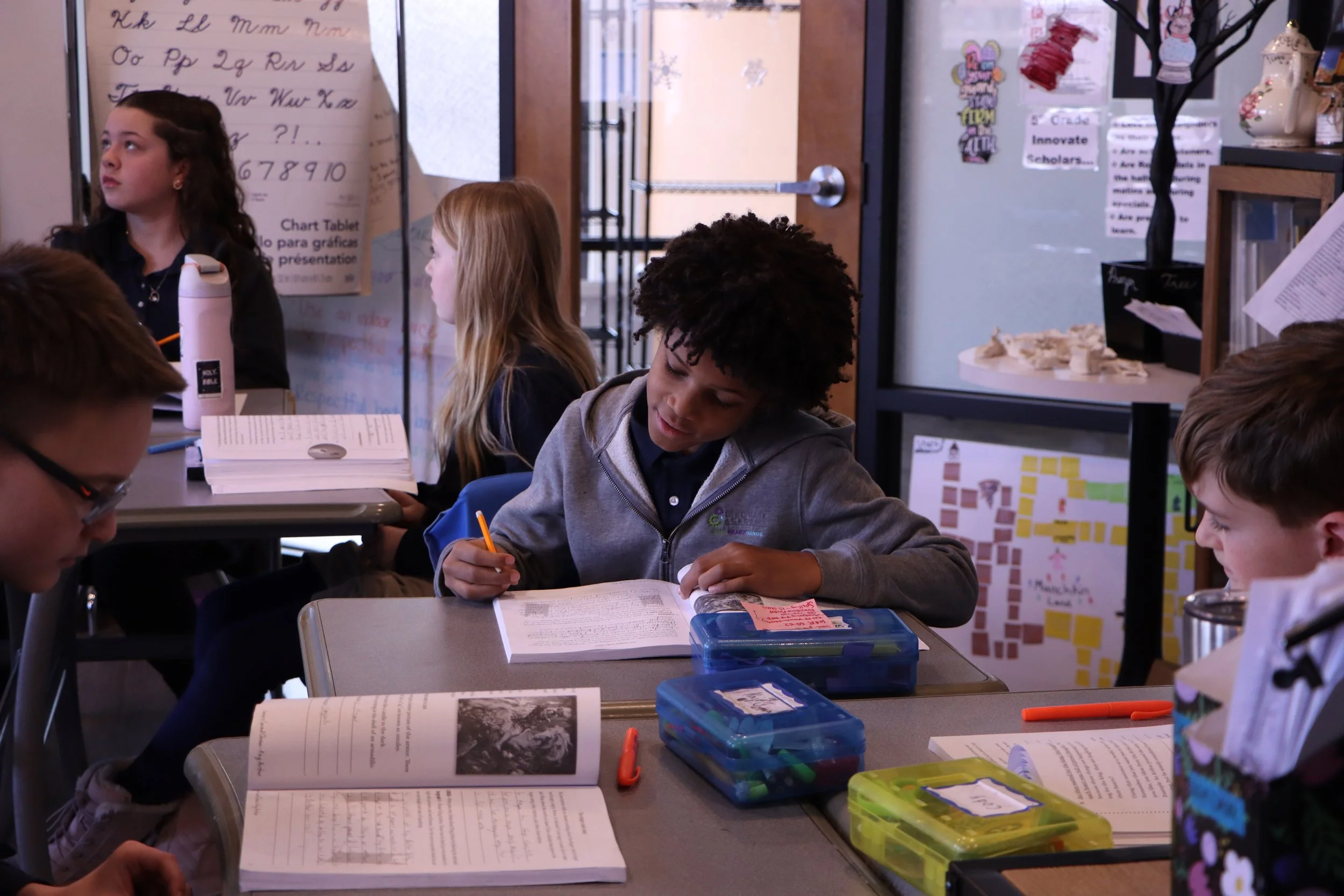
We do not offer civics as a stand-alone subject because, in a classical model, civics is not confined to a single class. It is woven into the fabric of the entire educational experience. When our scholars engage daily with great works of literature, history, and philosophy, they are doing more than acquiring knowledge—they are developing the habits of mind and character necessary for life in a free society.
This vision of education is not new. It reaches back to the traditions of ancient Greece, where education was understood as essential to the health of a republic. A flourishing society depends on citizens who can reason well, discern truth, and pursue virtue.
Traub contrasts this classical approach with more modern “progressive” models, which often emphasize personal interests, shifting trends, or isolated skill development. While we value creativity and practical skills at Innovate Academy, classical education places a unique emphasis on shared knowledge, cultural literacy, and intellectual discipline. Students must first encounter the great stories, ideas, and historical foundations that have shaped our world before they can thoughtfully engage with it.
This shared body of knowledge gives students a common language. It equips them to communicate clearly, to engage differences with understanding, and to participate meaningfully in public life. In a cultural moment often marked by division and polarization, such formation offers a compelling alternative.
But classical education does not stop at knowledge. It also intentionally cultivates virtue. Through practices such as recitation, public speaking, Socratic dialogue, and service, students are formed not only to think well but also to live well. Traub echoes Aristotle's vision: the goal of education is not merely intellectual excellence but human flourishing.
At Innovate Academy, this means preparing students for the fullness of life. Our scholars are not only being formed as future citizens but as future spouses, parents, leaders, and friends—individuals capable of contributing meaningfully to their communities.
What was once considered a niche approach to education is now a rapidly growing movement. Across the United States, thousands of classical and Christian schools—and an increasing number of classical charter schools—are emerging. Many families are drawn to this model as an alternative to educational systems they perceive as fragmented or overly utilitarian.
In a time of cultural uncertainty, classical schools have both an opportunity and a responsibility: to help rebuild a shared intellectual and moral foundation. The goal is not simply college readiness, but the formation of citizens—and ultimately, the pursuit of a good life.
