
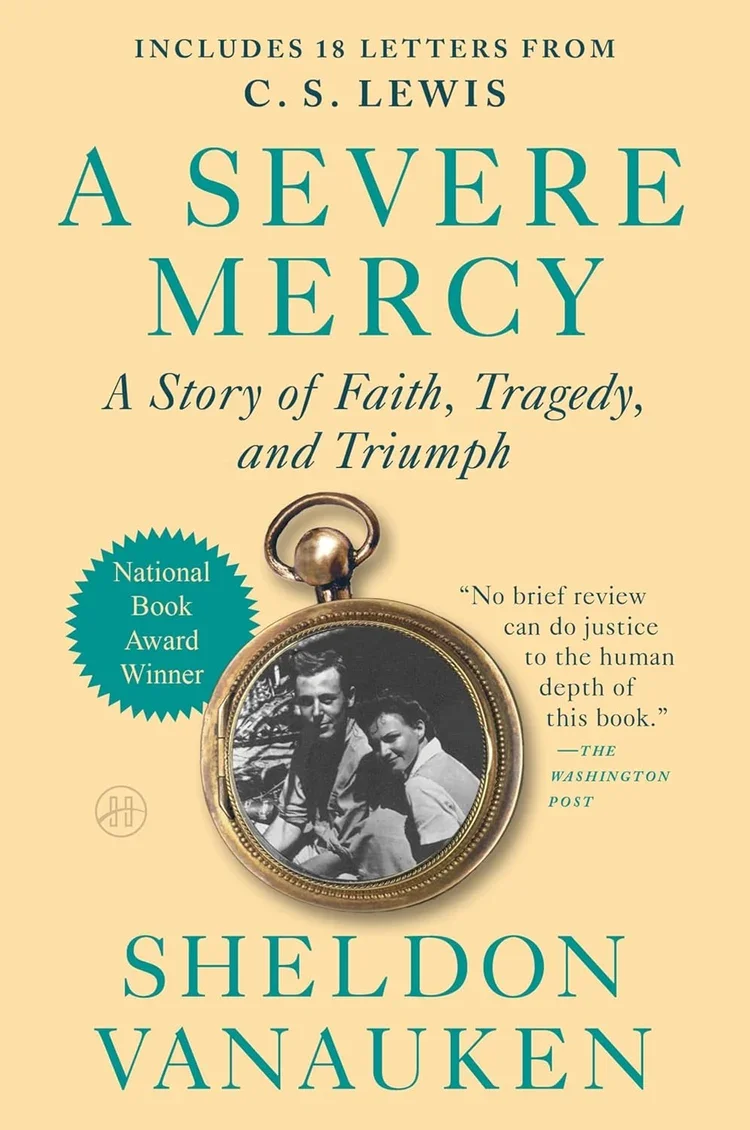
An Oxford love story, an extraordinary friendship with C. S. Lewis, and the wisdom we inherit from those who shape our lives.
Grandparents Day often brings to mind the sentimental traditions we cherish: family photographs, handwritten cards, shared stories, and the wisdom of those who came before us. But the true value of intergenerational relationships extends far beyond these lovely gestures. Sometimes we do not understand the significance of another person's influence until years later, when life presents us with a challenge we could never have anticipated. This November, as Inside Innovate explores the wisdom we inherit from grandparents, teachers, and mentors, we recommend a book that captures this truth with extraordinary literary beauty: Sheldon Vanauken's A Severe Mercy.
Winner of the National Book Award in Religion and Inspiration, A Severe Mercy is a memoir that reads like a sweeping romantic novel. It tells the story of Sheldon and his wife, Davy, whose passionate love begins in their youth and develops into a shared philosophy of life. Determined to protect their relationship from anything that might threaten it, they create what they call the "Shining Barrier," an almost sacred commitment to preserving their love. Their adventures include sailing aboard their beloved boat, Grey Goose, before eventually taking them to Oxford, where their intellectual curiosity leads them toward Christianity and an unexpected friendship with C. S. Lewis.
The Oxford chapters are among the book's greatest pleasures. Readers encounter the atmosphere of university life, philosophical discussions, poetry, and the intellectual excitement of two people discovering a faith they had not originally sought. Lewis emerges not as an untouchable literary celebrity but as a generous older friend, willing to entertain difficult questions and challenge the couple's assumptions about love, eternity, and God. Through conversations and letters, he helps them recognize that even the most beautiful human love cannot ultimately become an end in itself.
Yet the book's emotional power lies in what happens when these philosophical ideas cease to be merely intellectual. Following Davy's conversion to Christianity, Sheldon's own spiritual journey, and eventually the devastating experience of loss, Vanauken must confront the very questions he and Lewis once discussed. The wisdom Lewis shared becomes something more than an interesting argument. It becomes a framework through which Vanauken can begin to understand suffering, faith, and the possibility that even profound sorrow may contain an unexpected form of grace.
This is where A Severe Mercy becomes especially relevant to our November theme. We do not always recognize the value of another person's wisdom until life gives us a reason to need it. Lewis could not spare his younger friend from grief, nor could he provide easy answers to its mysteries. But his friendship, experience, and Christian perspective helped prepare Vanauken to face circumstances he could not have navigated in quite the same way alone. The relationship illustrates how the wisdom of an older generation can become an enduring source of strength for the next.
Vanauken's writing is another reason this book deserves a place on our reading lists. His lyrical descriptions of youthful romance, the couple's shared poetry, the atmosphere of Oxford, and the inclusion of Lewis's actual letters give the memoir an unusual intimacy. Its central metaphor, the Shining Barrier, is particularly compelling: what begins as a beautiful attempt to protect love eventually raises difficult questions about whether love can flourish when it is closed off from everything beyond itself. The book's greatest strength is its willingness to explore these tensions without diminishing the beauty of the relationship at its center.
Readers should know that this is not a lighthearted romance. The memoir's treatment of illness and grief is deeply affecting, and its theological reflections invite careful thought. Yet these qualities make it rewarding rather than merely sad. It is the kind of book whose questions remain with readers long after the final page.
For a classical Christian community, A Severe Mercy also demonstrates that the Great Conversation does not end when we close a book. It continues through friendships, correspondence, mentorship, and the shared search for truth. Just as Marcus Aurelius began his Meditations by acknowledging the people who formed his character, Vanauken's memoir reveals how profoundly another person's wisdom can shape our understanding of life's most difficult experiences.
With its Oxford setting, romance, poetry, intellectual friendships, and enduring questions about faith and love, A Severe Mercy is a wonderful choice for a quiet autumn or winter evening beside the fire. More than a story about grief, it is a story about the extraordinary gifts we receive through relationships—and how those gifts continue to sustain us.
Our November reading invitation: As you read, consider whose wisdom has prepared you for challenges you could not have anticipated. Perhaps it came from a grandparent, a teacher, a pastor, or an unexpected friend. And consider what wisdom you are passing forward to the next generation, even before they know how much they may one day need it.
