
Mentor Spotlight: Beyond the Buzzwords with Teresa Appleby
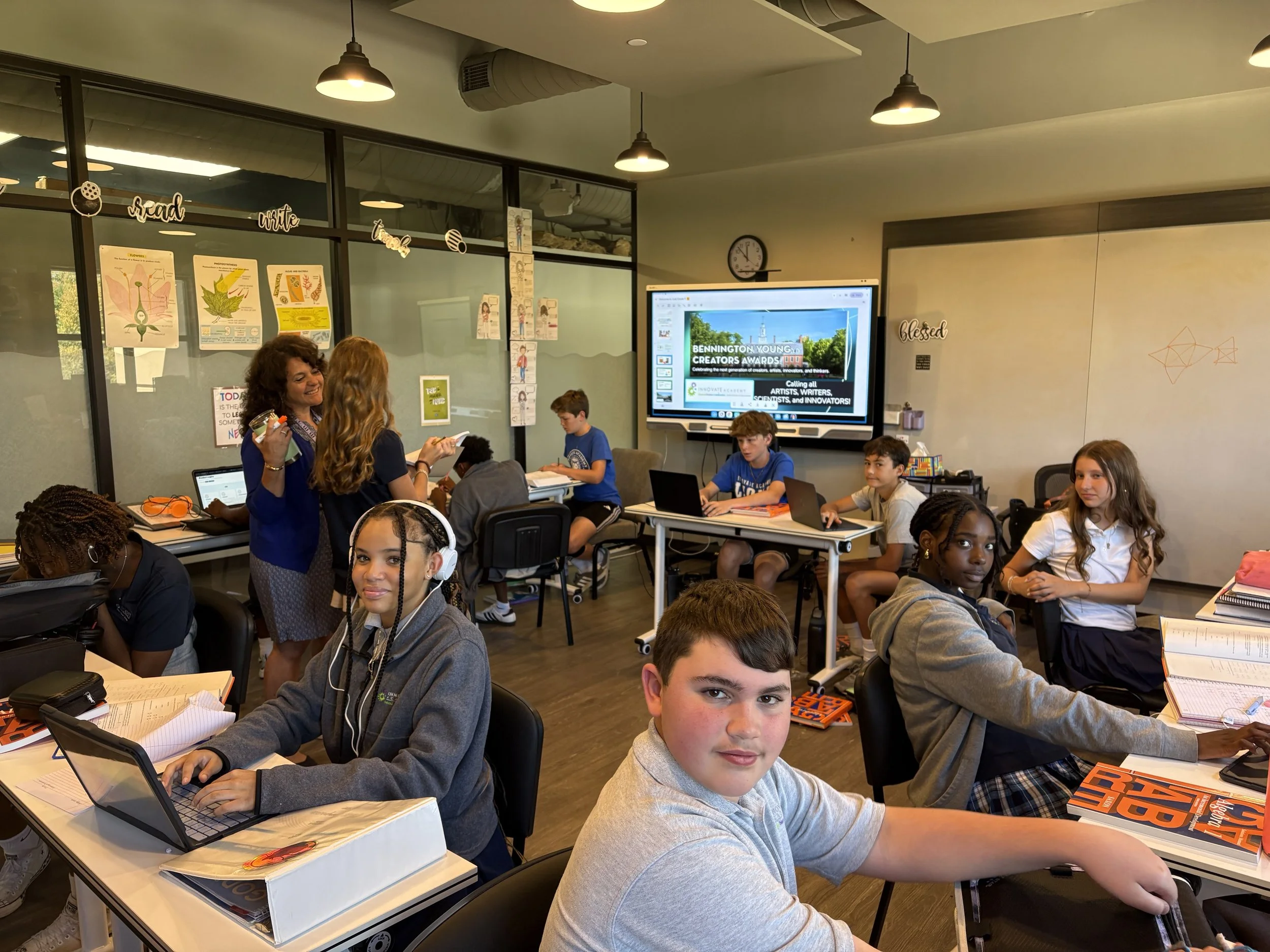
After 36 years in public education, Teresa Appleby has watched a lot of educational trends come and go.
STEM. STEAM. Project-Based Learning. Design Thinking. New acronyms arrive, professional development follows, and a few years later another idea takes its place.
“All of the acronyms and labels thrown around in education can make a person’s head spin,” Teresa says. “Every five years or so, something new gets thrown into the mix.”
But beneath the changing terminology, Teresa believes there is a much simpler question worth asking: What are we actually preparing students to do?
For Teresa, the answer begins with four skills: collaboration, communication, critical thinking, and creativity.
Known as the “4 Cs,” these skills have become increasingly important in conversations about preparing young people for a rapidly changing workplace. But Teresa doesn't believe they should simply become four more items for teachers to squeeze into an already crowded curriculum.
Instead, she wants to create more opportunities for scholars to practice them naturally.
“If teachers could implement lessons that challenged students to work together in teams in a way that fostered these 4 Cs, design thinking would become a natural next step,” she explains.
That distinction matters.
A history craft connected to a lesson can be valuable. So can memorization, repetition, structure, and routine. But Teresa wants scholars to have opportunities to go one step further—to encounter problems without predetermined answers.
What could you design? How might you solve this? What happens when your first idea doesn't work? Can you listen to someone else's idea and build something better together?
That is where learning begins to move from the head into the hands.
From Project to Problem-Solving
Teresa spent much of her 36-year career working in gifted and talented education, where she brought creative approaches to subjects including mathematics, science, and writing. At Innovate, she is now helping Mentors think more intentionally about the progression from classroom learning to deeper, hands-on experiences.
Project-Based Learning, STEM, STEAM, and Design Thinking overlap, but Teresa says they aren't quite interchangeable.
In true Project-Based Learning, students don't simply learn a unit and make a project afterward. The project itself becomes the vehicle for learning: students investigate a real-world problem over time, collaborate, revise their thinking, and ultimately create something in response.
STEM and STEAM intentionally bring disciplines together—science, technology, engineering, mathematics, and, in STEAM, art.
And Design Thinking gives scholars a process for approaching a problem: Empathize. Define. Ideate. Prototype. Test.
The crucial word may be prototype. The first answer isn't necessarily the final answer.
A scholar has to imagine something, make it, discover what doesn't work, listen to feedback, and try again. Failure becomes information rather than the end of the assignment.
For Teresa, that's a kind of learning worth protecting in a culture increasingly capable of producing instantaneous answers.
Imagine First
Teresa is bringing that philosophy into Innovate's new Upper School, but she is intentionally resisting the temptation to rush.
Grade 9 scholars are currently in the first stage of Innovate's four-year iLAB progression: Imagine.
Before asking a 14- or 15-year-old to design a career path, Teresa wants scholars to begin by understanding who they are.
Through Scripture, The 7 Habits of Highly Effective Teens, career-exploration resources, spiritual gifts, abilities, and personality assessments, scholars are beginning to ask questions about vocation and calling. They are choosing electives connected to potential interests and beginning to explore careers they may one day pursue.
“Most of our scholars are still in the exploration stage of career choices,” Teresa says. “They are not sure about who God has called them to be for Him, yet.”
The yet matters.
Imagine isn't meant to force an eighth- or ninth-grader to declare a future profession. It's to cultivate curiosity about the person God created them to become—and then give them tools, experiences, mentors, and opportunities to keep exploring.
Over time, career mentors, service learning, electives, and hands-on challenges can turn those questions into experiences.
Designing Culture
Some of Teresa's first experiments aren't happening in a traditional STEM lab. They're happening through House culture.
For House Initiation Day, scholars researched their patron saints and worked together to develop House blessings, chants, and handshakes. The assignment required collaboration and creativity, asking scholars to translate what they learned into something that could shape their community.
Meanwhile, another group of scholars is tackling a particularly literal design challenge.
In the Upper School, Dan Orth mentors Grade 8 scholars in App Design Club as they design and build an app for Innovate's House system, similar in concept to LiveSchool. The goal is to create a tool the school can actually use to track House points and participation. It's a small example of an important shift: instead of telling scholars how an existing system works, give them a real problem and ask them to build the solution.
The project requires more than coding. Scholars have to consider the people who will use the app, determine what those users need, think through how to organize information, collaborate on decisions, test what they create, encounter problems, and revise their work. In other words, they are practicing Teresa's four Cs while creating something that could become part of the culture around them.
Next comes the Fall Festival, where Teresa is exploring STEM and Design Thinking challenges inspired by inventors and inventions from the ancient world.
But she is thinking beyond individual events or House culture to all the components that make Innovate unique.
For example, in the 8th- and 9th-grade Culture Makers class, Teresa sees an opportunity for scholars to use design thinking around two larger themes: Biblical Hospitality and Creating Beauty.
During the first semester, scholars can ask a deceptively difficult question: How might we create an environment where families genuinely experience hospitality?
Rather than adults planning every detail, scholars can imagine interactive experiences, play opportunities for younger children, and hands-on elements connected to service projects such as the school's Thanksgiving partnership.
The second semester turns toward beauty. Possibilities include drawing from Aesop's Fables to inspire artwork and eventually taking creative work beyond the school through community partnerships.
The point isn't simply to make something attractive. It's to teach scholars that creativity can serve someone else.
Building Slowly, Building Well
Teresa is candid that creating this kind of culture will take time.
She has begun sharing math and language-arts resources with Mentors, identifying competitions in areas such as mathematics, art, and writing, and joining classrooms to model lessons emphasizing collaboration and critical thinking.
Eventually, she envisions STEM challenges intentionally connected to curriculum throughout the school. That will require Mentor training, planning time, and careful thought about where hands-on challenges genuinely deepen learning rather than becoming one more activity added to a crowded day.
True Design Thinking across the school, she believes, may take several years.
And that's okay.
Perhaps one of the benefits of 36 years in education is knowing that lasting change doesn't come from chasing the newest acronym. Instead, it comes from knowing what you're trying to cultivate.
For Teresa, that means scholars who can communicate clearly, collaborate generously, think critically, and create courageously—young people grounded enough to learn from what has come before them and imaginative enough to build what doesn't exist yet.
At Innovate, we call them culture-makers.
