The Collins Family: Raising Readers, One Story at a Time
If you ask Anne Collins how she inspired her children to become readers, she doesn't start with curriculum, reading levels, or educational strategies.
Instead, she talks about connection.
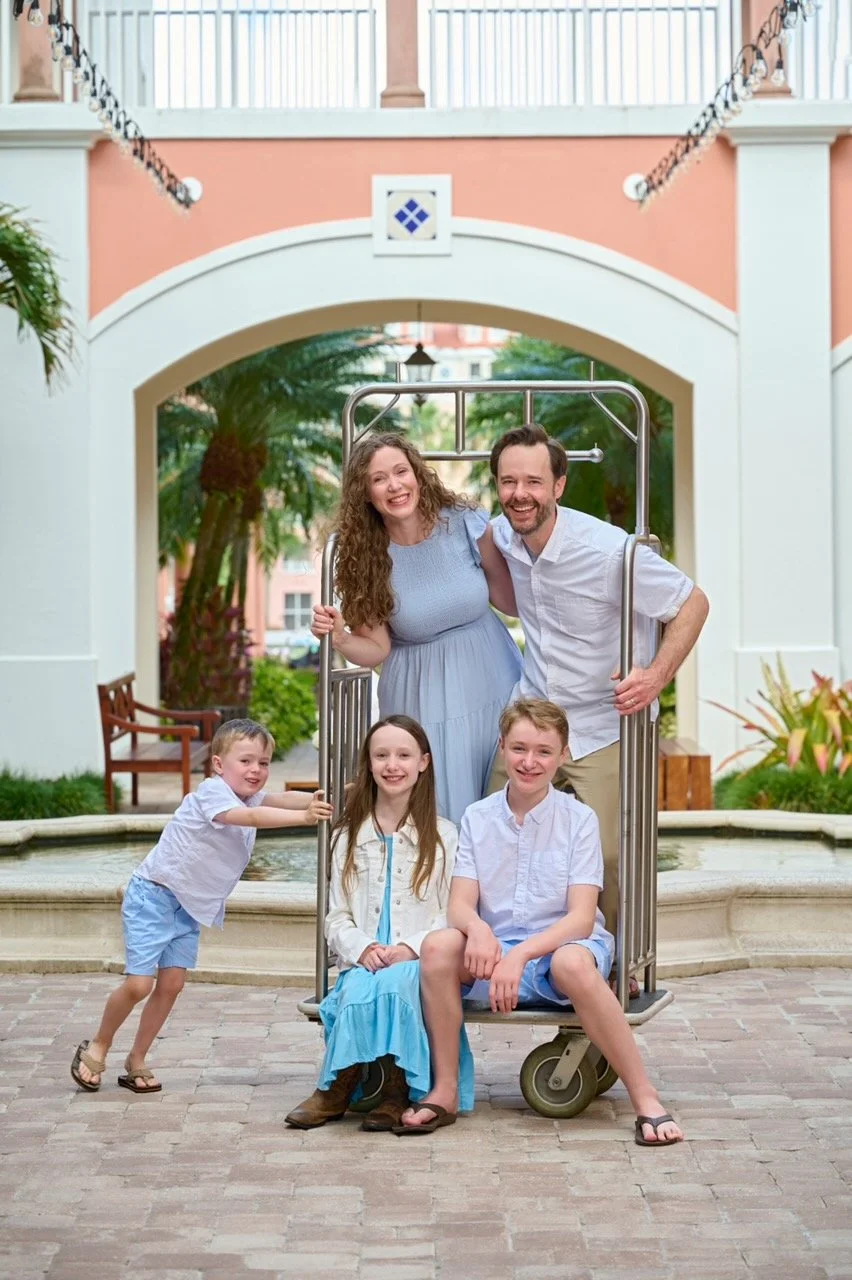
“Reading together was a way that we connected with each other,” Anne says. “I think that helped make my kids fall in love with reading because they associated it with something positive.”
For Anne and her husband Ken, reading was never simply an educational activity. It was family culture.
The Collins children—Bethany, Asher, and Micah—grew up surrounded by stories. Some of Anne's earliest memories as a parent involve curling up on the couch beneath a blanket with collections of Aesop's Fables, fairy tales, folk tales, and mythology spread across their laps.
“We would read them together on the couch or separately at bedtime,” Anne recalls. “I would often hear the kids playing pretend together afterward, acting out the stories we'd read. Sometimes Ken and I would even join in.”
Today, all three children are avid readers, but Anne believes those early moments mattered more than she realized at the time.
“When my older children were younger, we would focus on one collection for a while. One month might be fairy tales. Another might be Aesop's Fables. Another might be mythology or stories from other countries.”
The stories themselves were important, but the relationships built around them were even more significant.
That family-centered approach continues today with Micah, though parenting in a screen-filled world presents challenges Anne didn't face when her older children were younger.
“We don't make a big deal about it,” she says. “We just tell him we're all finished with screens and it's time to read books. Then, after unsuccessfully advocating for more time, he jumps up on one of our laps, and we read together.”
One of Micah's favorite activities is reading aloud to the family.
“His favorite thing right now is to read to us and have us respond to what he reads, kind of like we're having a conversation with the characters in the story.”
Perhaps surprisingly, Anne wasn't always a reader herself.
“I hated reading as a child,” she admits with a laugh. “I thought it was boring.”
Everything changed when she discovered a humorous chapter book series in elementary school.
“It was so funny. I had no idea books could be funny. That's when I realized reading could actually be fun.”
That experience shaped how she approached reading with her own children.
“I didn't want my children to miss out on years of reading because they thought books were boring, so I tried to read exciting books with a great storyline, beautiful illustrations, and a moral that we could discuss.”
Of course, there was another secret ingredient.
“My husband and I always used different voices for each character,” Anne says. “Sometimes my husband would pretend to be a British narrator, which often got a lot of laughs.”
When asked why she values reading fiction and mythology alongside Scripture, Anne is thoughtful.
“It's important for children to understand that not everything they read is true. There is fiction, and there is nonfiction. The Bible is true. It is the inerrant Word of God.”
Yet she also believes stories help children understand people, cultures, and history.
“When my kids were studying Ancient Greece, reading the Greek myths was so helpful because it helped us understand what those people believed and why they made some of the decisions they made.”
The Collins family's favorite books reveal just how broad their reading life has become: Magic Tree House adventures, fairy tales, Aesop's Fables, Norse mythology, Greek mythology, audiobooks on family road trips, and countless stories shared together through the years.
Looking back, Anne doesn't point to a particular program or strategy that made the difference.
Instead, she points to a couch, a blanket, a stack of books, and time spent together.
And perhaps that's the lesson.
Children don't simply learn to love books.
They learn to love the people who read them.